Summer Sale - Save on Everything!
 Free Shipping Over $99!
 Easy Guest Checkout
Bitter Melon Leaves: The Unexpected Green That’ll Brighten Up Your Kitchen

If you’ve ever walked through an Asian grocery store and spotted wrinkly green fruits called ampalaya or bitter melon, you probably assumed they were too bitter to touch. But here’s the twist, the leaves of that same plant are mild, delicious, and bursting with flavor when cooked right.
Let’s talk about why bitter melon leaves deserve a spot in your kitchen, even if you’ve sworn off “bitter” foods in the past.
What Are Bitter Melon Leaves?
Meet the Underrated Green Star
Bitter melon leaves come from the same plant as the bitter melon fruit, part of the gourd family. The leaves are tender, slightly fuzzy, and carry a subtle bitterness that becomes mellow when cooked. Think of them as spinach with an attitude, bold, flavorful, and totally unique.
They’re popular in Filipino, Thai, Indian, and Chinese cooking. Often found in backyard gardens across Asia, they’re used in soups, stir-fries, and teas. Once you get the balance right, they’re downright addictive.
Where You’ve Seen It Before
You might have encountered them in traditional dishes like Filipino ginisang ampalaya, Thai vegetable soups, or as part of herbal remedies. In many cultures, bitter melon leaves are considered a healing food, said to cool the body, aid digestion, and restore balance after heavy meals.
The Taste Factor – Why So Bitter?
Understanding the Bitterness
That signature bitterness comes from a compound called momordicin. It’s the same thing that gives the fruit its sharp edge. But here’s the secret the bitterness is totally manageable. When cooked properly, it transforms into a clean, earthy flavor that feels refreshing rather than overpowering.
How to Tone It Down
If you’re new to bitter greens, here’s your trick:
- Blanch the leaves in hot water for 30 seconds, then drain.
- Or, massage them with salt for a few minutes before rinsing.
Either way, the harsh edge softens, and you’re left with a vibrant green that’s perfect for sautéing, soups, or even mixing with rice.
Why You’ll Love Cooking Bitter Melon Leaves
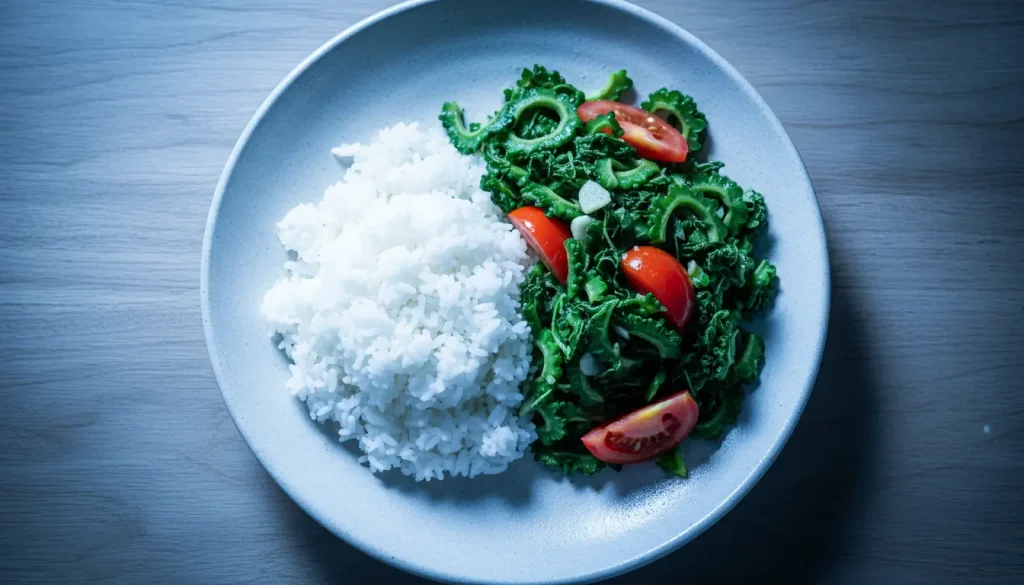
Bitter melon leaves are more than just an exotic ingredient, they’re nutrient-rich, budget-friendly, and super versatile. Here’s what makes them a must-try:
- High in antioxidants – great for boosting your immune system.
- Rich in vitamins A and C – good for skin, eyes, and overall health.
- Low-calorie, high-fiber – keeps you full without weighing you down.
- Naturally vegan – perfect for plant-based diets.
They bring that “real food” energy to your meals, earthy, clean, and full of character.
Cooking Bitter Melon Leaves
Ingredients You’ll Need
Here’s a simple way to bring out the best in bitter melon leaves:
- 2 cups fresh bitter melon leaves
- 2 tbsp olive or coconut oil
- 3 cloves garlic, minced
- 1 small onion, sliced
- 1 tomato, chopped
- Salt and pepper to taste
- Optional: chili flakes, soy sauce, or lemon juice for extra punch
Step-by-Step Guide
- Prep the leaves: Wash them well, then give them a light salt rub and rinse to reduce bitterness.
- Sauté aromatics: Heat oil in a pan, add garlic and onion until fragrant.
- Add tomatoes: Cook until soft and juicy.
- Toss in the leaves: Stir until just wilted, you want them bright green, not soggy.
- Season to taste: Add salt, pepper, and a splash of soy sauce or lemon juice to balance the flavors.
Serve warm with steamed rice, or as a vibrant side dish to grilled fish or tofu.
Creative Ways to Serve Bitter Melon Leaves
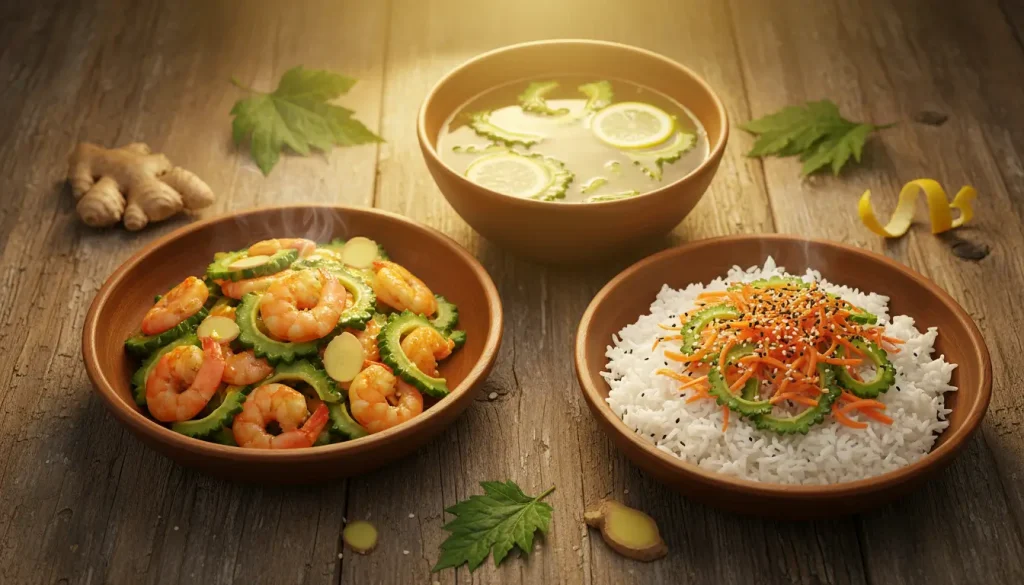
You don’t have to stick to one style, this green plays well in all sorts of dishes.
1. Simple Stir-Fry
Toss with garlic, onions, and chili for a five-minute stir-fry that goes perfectly with plain rice.
2. Leafy Soup
Boil the leaves with ginger, tomato, and vegetable broth for a comforting, lightly bitter soup — great on a rainy day.
3. Mixed Rice Bowl
Add sautéed leaves to a warm rice bowl topped with tofu, egg, or grilled chicken. Sprinkle sesame seeds for a nutty finish.
4. Ampalaya Leaf Omelette
Mix chopped leaves into beaten eggs, sauté with onion and tomato, and fry, breakfast with a twist!
5. Herbal Tea
Dry the leaves and steep them for a few minutes. Bitter melon leaf tea is earthy, calming, and said to help with digestion.
Pro Tips for Cooking Bitter Melon Leaves
- Don’t overcook them. Two to three minutes is plenty, any longer, and they lose their vibrant color and flavor.
- Balance bitterness with acid. Lemon juice, vinegar, or tomatoes work wonders.
- Add a touch of sweetness. A pinch of sugar or drizzle of honey brings harmony to the dish.
- Pair wisely. The leaves taste great with mild ingredients like eggs, tofu, or seafood.
Common Mistakes to Avoid
- Skipping the prep: Never cook them straight without rinsing or salting, it’s a rookie mistake that’ll leave you with extra bitterness.
- Using too much oil: These leaves cook fast, so go light on oil.
- Not tasting as you go: Their flavor intensity can vary, so adjust seasoning while cooking.
Cultural Touch – How Different Cuisines Use Bitter Melon Leaves

Filipino Kitchen
In the Philippines, these leaves often appear in ginisang ampalaya or added to soups for extra nutrition. They’re a comfort food staple, simple, homestyle, and deeply flavorful.
Thai and Vietnamese Cuisine
Here, the leaves are mixed into herbal soups or stir-fried with chili and garlic. The balance of spicy, sour, and slightly bitter flavors is what makes Southeast Asian dishes so satisfying.
Indian Touch
In India, bitter melon leaves are part of Ayurvedic cooking, known for cleansing the blood and aiding digestion. They’re often combined with lentils, turmeric, and spices.
Health Benefits That Might Surprise You
Aside from being delicious, bitter melon leaves are a mini powerhouse of wellness:
- Helps regulate blood sugar naturally.
- Supports liver health and detoxification.
- Boosts immunity with antioxidants.
- Improves digestion and gut health.
It’s like your body says “thank you” every time you eat it.
FAQs About Bitter Melon Leaves
1. Can I eat bitter melon leaves raw?
They’re technically edible raw but are quite bitter, best to cook them lightly.
2. Where can I buy bitter melon leaves?
Asian supermarkets or local farmers’ markets often carry them fresh or frozen.
3. How do I store them?
Wrap in a damp paper towel, seal in a bag, and refrigerate for up to 3 days.
4. Are they good for diabetics?
Yes, bitter melon leaves are traditionally used to help regulate blood sugar levels naturally.
5. Can I use them in smoothies?
You can, but start with small amounts, they add a bitter edge that not everyone enjoys raw.
6. Do bitter melon leaves taste like spinach?
Not exactly. They’re stronger and more herbal, but similar in texture once cooked.
Conclusion – Give Bitter Melon Leaves a Chance
Bitter melon leaves might not be love at first bite, but they’ll win you over with their earthy charm and healthy kick. Once you learn how to balance their flavor, you’ll realize they’re one of those secret ingredients that make homemade meals unforgettable.
So next time you see a bunch of these deep green leaves at the market, grab them, and surprise yourself with how good “bitter” can taste.
Learn more about the health benefits of bitter melon leaves at Healthline.